Both trials demonstrated low rates of complications after 30 days, and were largely able to cross through lesions for a successful procedure. They were presented at the Transcatheter Cardiovascular Therapeutics (TCT 2026) conference being held in San Diego.
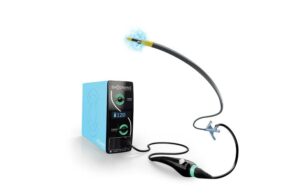
Abbott (NYSE: ABT) said its SonicForce system met its primary endpoints in a pivotal trial of about 330 patients with severely calcified and previously untreated coronary artery disease. Its balloon catheter delivers acoustic pressure waves to crack through calcium deposits before the placement of a stent, helping it to fully expand.
After one month, the company’s TECTONIC study reported a treated lesion failure rate of 0.3%, after recording a procedural success rate of 97%. Following treatment and delivery of a drug-eluting stent, 98.5% of cases were able to reach residual stenosis levels of 30% or lower, confirmed by angiography.
A sub-study of patients who also underwent optical coherence tomography imaging logged 50 out of 80 lesions demonstrating signs of calcium fracture after IVL, along with 53 out of 80 after stenting, allowing for more favorable stent expansion.
“The investigational SonicForce System has the potential to expand Abbott’s broad range of access-to-closure devices, strengthen our leadership in treating severely calcified coronary arteries, and reinforce our commitment to equip physicians with integrated solutions for patients at every stage of care,” Julie Tyler, senior VP of Abbott’s vascular business, said in a statement.
TECTONIC’s results were also published in JACC: Cardiovascular Interventions. The study plans to follow participants through two years.
Related: J&J launches faster Shockwave coronary catheter in the US
Johnson & Johnson MedTech had positive results for IVL, too
Meanwhile, J&J (NYSE: JNJ) spotlighted data from its Shockwave Javelin catheter, designed to project forceful energy ahead of its tip with a single emitter instead of around its circumference to help clear a way through difficult lesions.
Its single-arm FORWARD CAD study met its endpoints examining 158 patients, reporting a 93.6% technical success rate and 93.4% freedom from major cardiovascular complications, including death, heart attack or the need for a repeat procedure after 30 days.
According to the company, 96% of cases were moderately or severely calcified, with an average reduction in inner vessel diameters of 81%. Chronic total blockages were found in 20% of lesions.
“Successfully treating heavily calcified lesions begins with being able to facilitate lesion crossing, an enduring challenge that can limit what physicians can achieve for patients,” said the study’s co-principal investigator, Dr. Robert Yeh, interventional cardiology section chief at Beth Israel Deaconess Medical Center.
“These findings represent an important step toward overcoming that barrier and creating a viable treatment path for patients whose disease may be beyond the reach of conventional balloon-based calcium modification approaches,” Yeh said.
The Javelin system was previously launched in the U.S. in early 2025 for use in peripheral arteries. Earlier this month, J&J began rolling out the latest version of its circumferential coronary catheter, the Shockwave C2 Aero Fly, which delivers ultrasonic energy twice as fast as its previous version.
While J&J’s Shockwave division has had an early lead in the space, following its $13.1 billion acquisition in 2024, Boston Scientific and Stryker are also targeting the sector.
Earlier this year, Boston Scientific’s Seismiq coronary IVL system met its endpoints in a pivotal trial — while Stryker reported enrolling its first participants for a study of its Pulse system, acquired through its $835 million buy of Amplitude Vascular Systems, finalized in May.