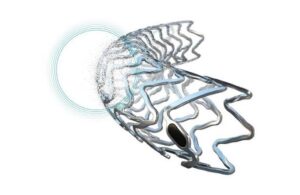
Freesolve came to Teleflex through its 2025 acquisition of the Biotronik Vascular Interventions business. It features the BIOmag magnesium alloy and Orsiro drug-eluting stent coating technology. The company developed the scaffold for individuals with chronic limb-threatening ischemia (CLTI). Biotronik won FDA investigational device exemption (IDE) for Freesolve in March 2024.
In May 2024, Biotronik kicked off the BIOMAG-II study comparing the next-generation Freesolve scaffold to a contemporary drug-eluting stent (DES). Now, Teleflex says the new BIOMAG-III IDE study represents “the most comprehensive planned clinical evaluation of Freesolve RMS to date.”
“The BIOMAG‑III study is a pivotal trial designed not only to meet rigorous regulatory standards, but also to demonstrate the long‑term safety and efficacy of a fully resorbable magnesium scaffold for patients, physicians, and healthcare systems,” says Dr. Georg Nollert, VP, Medical Affairs at Teleflex. “We believe Freesolve RMS has the potential to reshape the coronary intervention landscape, and the BIOMAG‑III study could be the catalyst to drive that.”
More about the Teleflex study and plans for Freesolve
Dr. Itsik Ben-Dor of MedStar Health completed the first implant in the U.S. as part of the study. Dr. Ron Waksman of MedStar serves as chair of the steering committee of the study. Piedmont Heart Institute Chief Dr. David E. Kandzari serves as U.S. national principal investigator.
Teleflex expects to enroll 1,859 patients in the study, which compares Freesolve to the Abbott Xience DES with respect to target lesion failure (TLF) rate at 12 months. The study includes scaffold lengths up to 40 mm. Investigators expect to conduct the study at up to 120 global sites, including up to 60 in the U.S.
Meanwhile, Teleflex said enrollment recently completed ahead of schedule for BIOMAG-II. The study enrolled 1,861 patients across 20 countries in Europe and Asia Pacific.
Additionally, Teleflex announced positive long-term data from the BIOMAG-I first-in-human study. It demonstrated 3.5% TLF at four years and no new clinical events between two and four years for Freesolve RMS.
The Freesolve RMS is engineered to resorb within 12 months, potentially reducing long‑term events associated with permanent metallic implants.