
Researchers from the Massachusetts Institute of Technology have developed a knotted-tube device that could be an easier alternative to gastrointestinal dysmotility diagnostics.
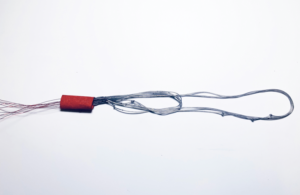
The MIT researchers, along with collaborators from Brigham and Women’s Hospital, designed a device that comprises a silicone tube filled with liquid metal and knotted multiple times and can generate measurements similar to high-resolution manometry, the gold-standard diagnostic technique. It is derived from the “ancient Incan technology” known as quipu, in which a set of knotted cords is used to communicate information, the researchers said.
They suggest that the device could be a cheaper and easier-to-manufacturing alternative to existing diagnostic devices for GI dysmotility. The existing tech usually involves a catheter containing pressure transducers to sense contractions in the GI tract.
“This is a really simple, inexpensive setup, yet we’re able to make a measurement that typically would require devices that cost thousands of dollars and require an instrument that is much more complicated,” said Giovanni Traverso, a gastroenterologist at Brigham and Women’s Hospital and senior author of the study.
Contractions of the GI tract are needed for moving food through the tract. Health problems can occur if there is an interruption in the contractions. The gold-standard diagnostic method measures the muscles of the GI tract and whether they are working correctly using manometry.
“High-resolution manometry can measure the pressure and speed with which the contractile waves are traveling, but those systems are fairly expensive, in the tens of thousands of dollars range, and they require maintenance and sterilization between patients,” Traverso said.
MIT research scientists Kewang Nan and Sahab Babaee led the team of researchers to develop a diagnostic device that was based off of Incan technology of quipu. Quipu devices consist of colored cords knotted in different ways and were used by the Inca and other ancient civilizations to record information and send messages, according to the MIT news release.
“Our goal was to make a device comparable to the existing, commercially available, catheter-based pressure transducers, but at the same time, bring down the cost and make it easier to produce and deploy,” Nan said.
The catheter of the GI tract diagnostic is made of silicone and is filled with gallium-indium eutectic and sealed at both ends. When it’s unknotted, the tube can respond to changes in pressure, but it is not sensitive enough to detect changes in pressure in the GI tract.
Knots at intervals along the tube resulted in the catheter becoming more sensitive to changes in pressure. The knotted device detected pressures up to about 200 mm of mercury, the highest pressure in the human digestive tract, according to the MIT team.
The MIT researchers also said that the pressure sensitivity can vary based on the type of knot and how tightly it is tied. Nan and the research team used knots spaced about 1 cm apart to match the spacing of the pressure transducers in manometers for the digestive tract. They suggest the knots could be tied closer together for other applications.
So far, the researchers have tested the device in animal models to measure pressure in the esophagus as food was swallowed and measured the rectoanal inhibitory reflex (RAIR). They found that the devices generated pressure measurements that were similar to those of gold-standard manometry techniques.
The MIT-developed device can withstand high temperatures and is able to be treated in an autoclave for sterilization.
“They’re super quick to build and super cheap,” Nan said. “Another motivation for making GI manometers cheap and disposable is to promote decentralized diagnosis. Here, being cheap facilitates accessibility by bringing down cost, and being disposable further helps public acceptance by eliminating cost of maintenance and reducing complication during use.”
The research was funded by the MIT Department of Mechanical Engineering and was published in the journal Nature Biomedical Engineering.