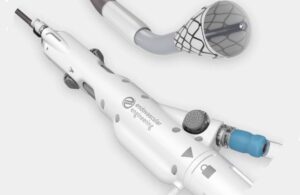
The Hēlo system combines continuous vacuum aspiration with physical agitation to help break up the blood clot. Its catheter starts with a lower-profile, 15-French design that can expand its end into a 24-French funnel to offer a larger bore once it reaches its target. Hēlo is also indicated for use in peripheral vessels to treat venous thromboembolism.
E2 described the agency’s 510(k) for its integrated return system as a first for continuous aspiration catheters. The company’s clinical trial earlier this year reported near-zero blood loss as Hēlo filtered aspirated whole blood and routed it back into the body.
“This milestone is the culmination of years of focused innovation to create a unique and complete platform that addresses the procedural limitations physicians currently experience when treating PE,” E2 CEO Dan Rose said in a statement. “Physicians have communicated their needs clearly: large-bore clot removal performance in a low-profile catheter, with a single-pass procedure and integrated blood return capability.”
Related: Jupiter Endovascular reports positive findings for Vertex pulmonary embolectomy system
“With dual FDA clearances in hand, we are accelerating our plans to deliver this complete solution to a broad range of physicians and patients,” Rose added.
The company’s ENGULF study, previously presented in 2024, had recorded all 25 patients undergoing successful clot removals from the pulmonary arteries, as well as no major complications and zero deaths after 30 days.
Earlier this year, E2 raised $80 million in a series C round to support Hēlo’s planned commercialization.
Meanwhile, this past February saw the American Heart Association and American College of Cardiology issue new guidelines for the treatment of pulmonary embolism, recommending mechanical thrombectomy in certain severe cases.