• Skip to primary navigation
  • Skip to main content
  • Skip to primary sidebar
  • Skip to footer
  • Advertise
  • Subscribe

Medical Tubing and Extrusion

Medical tubing and extrusion technologies

  • Technologies
    • Balloons
    • Brain-computer interfaces
    • Cardiac Implants
    • Catheters
    • Endoscopes
    • Heart valves
    • Pulsed Field Ablation
  • Components
    • Connectors
    • Needles and Injections
    • Seals
    • Tubing Components
  • Manufacturing
    • Coatings
    • Extrusions
    • Machining
    • Molding
      • Injection Molding
      • Insert molding
      • Mold Components
    • Tools
  • Materials
    • Advanced Materials
    • Metals
    • Nitinol
    • Plastics
    • Silicone
  • Business
    • Distribution Agreements
    • Legal News
    • Mergers & Acquisitions
    • Partnerships
    • Personnel Moves
  • Regulatory
    • 510(k)
    • CE Mark
    • FDA Breakthrough Designation
    • ISO Certification
    • Pre-Market Approval (PMA)
    • Recalls
  • Suppliers
  • About Us

How to weave human tissue into new blood vessels

April 27, 2020 By Danielle Kirsh

woven-blood-vessels
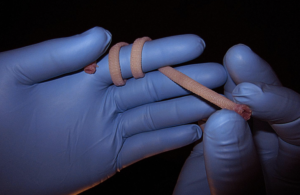
[Image from Nicolas L’Heureux, Inserm/University of Bordeaux, France]
Researchers at the University of Bordeaux in France have engineered human tissue to be woven into blood vessels and treat diseased or damaged blood vessels.

Synthetic blood vessel grafts are typically made of woven synthetic polymer yarn and used to replace diseased arteries. However, the body’s immune system sometimes recognizes the material as foreign and causes blood clots on the grafts and creates scarring that can clog the tube. The researchers suggest that the engineered human tissue blood vessels don’t require synthetic materials, making them easily accepted by the body’s immune response.

“Blood vessels are just one example of what can be done with our new textile approach to tissue engineering,” lead author on the study Nicolas L’Heureux said in a news release. “it can be used to make practically any shape by weaving, braiding or knitting the threads and allows very good control of the mechanical properties of the final product.”

The researchers designed the threads using a biomaterial called the cell-assembled matrix (CAM), which was developed by L’Heureux’s research team. CAM consists of mostly collagen, which is a natural protein in the body that strengthens tissues and organs. The CAM material is accepted by the body because it is made of human material and isn’t chemically modified.

In the study, L’Heureux and the researchers showed that they could make yarn by cutting CAM sheets into ribbons that can be directly used or twisted into threads. The threads can then be woven as blood vessels that display excellent mechanical properties without the need for synthetic scaffolding or chemical treatments.

“It is time-consuming and costly to get CAM layers to stick together,” L’Heureux said. “The new textile assembly approach is not only more versatile but also has the potential to be automated which would make it even faster, easier and cheaper to use.”

The researchers suggest that CAM could be used to jumpstart the regeneration of many tissues and organs as well. So far the team has made lab-grown skin for burn patients and guides that repair nerve injuries using CAM. They plan to build more blood vessel prototypes to learn the best ways to handle CAM threads and ribbons and will begin testing the vascular grafts in animals.

The research was published in the FASEB Journal.

Filed Under: Prototyping, Research & Development Tagged With: University of Bordeaux

About Danielle Kirsh

Danielle Kirsh is an award-winning journalist and senior editor for Medical Tubing + Extrusion, Medical Design & Outsourcing and MassDevice. She received her bachelor's degree in broadcast journalism and mass communication from Norfolk State University and is pursuing her master's in global strategic communications at the University of Florida. You can connect with her on Twitter and LinkedIn, or email her at dkirsh@wtwhmedia.com.

Primary Sidebar

“mte
EXPAND YOUR KNOWLEDGE AND STAY CONNECTED
Get the latest trends and developments in medical tubing and extrusion.
MDO ad

Sponsored Content

A new way to access scientific papers?

Mass Device

The Medical Device Business Journal. MassDevice is the leading medical device news business journal telling the stories of the devices that save lives.

Visit Website

MEDTECH 100 INDEX

Medtech 100 logo
Market Summary > Current Price
The MedTech 100 is a financial index calculated using the BIG100 companies covered in Medical Design and Outsourcing.

Footer

Inv Logo

MASSDEVICE MEDICAL NETWORK

MassDevice
DeviceTalks
Medical Design & Outsourcing
MedTech 100 Index
Drug Discovery & Development
Pharmaceutical Processing World
Medical Design Sourcing
R&D World
Drug Delivery Business News

Medical Tubing + Extrusion

Subscribe to our E-Newsletter
Advertise with us
About
Attend our Monthly Webinars
Listen to our Weekly Podcasts
Join our DeviceTalks Tuesdays Discussion

Copyright © 2025 · WTWH Media LLC and its licensors. All rights reserved.
The material on this site may not be reproduced, distributed, transmitted, cached or otherwise used, except with the prior written permission of WTWH Media.

Privacy Policy | RSS