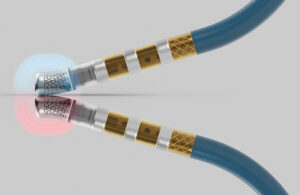
TactiFlex Duo joins Johnson & Johnson MedTech’s ThermoCool SmartTouch SF and Medtronic’s Affera Sphere-9 catheter in the U.S. dual-energy ablation catheter market. Medtronic won its Sphere-9 approval in 2024, and J&J earned FDA approval for its system in July 2026. (In August, Affera Sphere-9 earned an expanded CE mark indication to treat ventricular arrhythmias.)
The dual-energy system enables electrophysiologists to toggle between pulsed-field ablation (PFA) and radiofrequency (RF) energy to treat patients with difficult atrial fibrillation cases.
Abbott says the combination of both technologies into a single system allows physicians greater flexibility in a single procedure, “helping them tailor treatment to each patient’s anatomy and clinical needs while minimizing impact on surrounding healthy tissue.”
“TactiFlex Duo represents an important advancement as Abbott builds the industry’s most comprehensive electrophysiology portfolio,” said Uri Yaron, senior vice president of Abbott’s electrophysiology business, in a statement to MassDevice. “From diagnosis, mapping and intracardiac ultrasound imaging to advanced treatments for the most complex arrhythmias, Abbott is uniquely positioned to support physicians at every stage of patient care.
“By continuing to expand our PFA portfolio and integrate innovative technologies across cardiovascular care, we’re helping physicians navigate increasingly complex procedures while ensuring more patients receive the right care at the right time,” he said.
TactiFlex Duo received CE mark in January and earned FDA breakthrough device designation in October 2025 for the catheter for treating ventricular tachycardia.
In August, Abbott presented 12-month clinical evidence from its investigational device exemption (IDE) study in patients with paroxysmal AFib, or periodic irregular heart rhythm episodes.
Related: Abbott studies support pulsed field ablation, dual ablation catheters
The data, which supported the catheter’s FDA submission, showed nearly 75% of patients remained free from documented arrhythmias, medication changes or repeat procedures after undergoing a procedure with TactiFlex Duo, the company said.
Nearly 93% of patients did not have a documented recurrence of AFib, atrial flutter or atrial tachycardia during follow-up, when assessed using standard-of-care monitoring, the company said. In more rigorous heart rhythm assessments throughout the study, over 77% of patients experienced no documented recurrences.
“The evidence behind this device helps increase confidence in ablation therapy and hopefully support lasting outcomes for patients with atrial fibrillation,” Dr. Ayman Hussein, Director of cardiac electrophysiology research at Cleveland Clinic, who presented the data, said in the announcement.