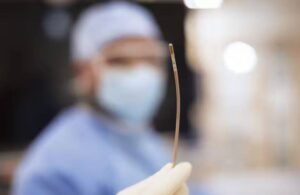
Philips today announced the first procedures in Europe with its recently launched VeriSight Pro 3D ICE catheter.
Doctors at the German University Medical Center Mainz and Robert Bosch Hospital in Stuttgart completed the first procedures in Europe after the intracardiac echocardiography (ICE) catheter following its launch across the continent last month.
Amsterdam-based Philips designed the technology to deliver real-time 3D imaging directly inside the heart. It helps physicians perform procedures with greater clarity and without the need for general anesthesia.
VeriSight goes through a patient’s blood vessels until it lies directly inside the chambers of the heart. It aids in planning and guiding complicated interventional procedures by delivering high-quality imaging. The system can help characterize difficult-to-image heart structures like the left atrial appendage or tricuspid valve, for instance, aiding in procedures like transcatheter valve repair and appendage closure.
More about the procedures with the Philips catheter from the doctors who performed them
Dr. Stephan von Bardeleben and Dr. Philip Lurz led the procedures in Mainz. They used VeriSight Pro 3D to guide tricuspid valve repair procedures, marking a European first in clinical use.
“The VeriSight Pro 3D ICE catheter allowed us to visualize the tricuspid valve in real-time with exceptional clarity, directly from within the heart,” said von Bardeleben. “This innovation helped us guide the procedure more confidently and efficiently — all without the need for general anesthesia. For our patients, this means a safer, faster recovery.”
In Stuttgart, Dr. Philipp Nikolai and team used the technology for both tricuspid and mitral valve interventions.
“Performing both tricuspid and mitral valve interventions with the support of VeriSight Pro demonstrated the true potential of real-time 3D ICE,” said Dr. Nikolai. “It gave us clear, intraprocedural guidance during leaflet grasping, which is a key step in TEER procedures. This technology offers an alternative to TEE that is not only less invasive but also more efficient for the clinical team.”