Investigators published findings from the landmark TAILORED-AF clinical trial in Nature Medicine. Data demonstrated that an AI-guided procedure for persistent AFib in combination with conventional pulmonary vein isolation (PVI) therapy resulted in better outcomes than AFib alone.
In particular, the study showed superiority in the percentage of patients that achieved freedom from AFib with or without anti-arrhythmic drugs at 12 months after a tailored cardiac ablation guided by AI in combination with PVI when compared to PVI alone.
The company labeled TAILORED-AF the first large-scale, transatlantic randomized controlled trial of ablation in persistent AFib to show the benefit of going beyond conventional PVI. Previous studies looking at ablation strategies failed to demonstrate superior efficacy to PVI alone, the company says.
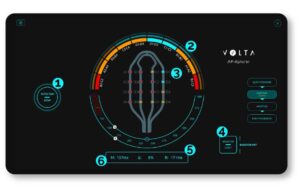
Volta Medical develops the Volta AF-Xplorer, a digital AI companion used in the trial. It designed it to assist cardiologists with real-time identification of specific abnormal electrograms (EGMs). The system featured on MassDevice’s list of AI-powered cardiology technology you need to know.
A look at the study results from Volta Medical
The study enrolled adult candidates for first-time ablation with symptomatic persistent or long-standing persistent AF in the U.S. and Europe. It evaluated 187 patients undergoing a tailored ablation guided by Volta’s AI in addition to PVI. Meanwhile, 183 patients received conventional PVI.
Investigators followed patients out to 12 months. A total of 51 electrophysiologists at 26 centers in five countries participated.
Volta reports that its trial met its primary endpoint. It demonstrated superior results in patients receiving AI-guided ablation compared to PVI only. In the tailored cohort, 88% of patients experienced freedom from AFib 12 months after one procedure with or without anti-arrhythmic drugs. That compared to 70% in the other cohort.
Additionally, tailored patients experienced a higher rate of freedom from any arrhythmia after 1.3 procedures (79% vs. 71%). Investigators regarded recurrences in the tailored cohort as a “simplification” of AFib. The company said these prove generally easier to ablate and often constitute a step toward stable sinus rhythm.
The study also saw a higher rate of freedom from any arrhythmia after one single procedure in the tailored arm (62% vs. 48%). Volta said the safety endpoint did not differ between groups. However, it reports that procedure and ablation time came in twice as long in the tailored arm. That fell in line with treatment time for other PVI+ methods, the company said.
“Previously, there has not been a replicable, effective treatment strategy for patients with persistent atrial fibrillation. Volta’s AI solution finally offers a solution for this large and underserved patient population,” said Théophile Mohr-Durdez, CEO and co-founder of Volta Medical. “The TAILORED-AF trial, highlights AI’s ability to help physicians treat cardiovascular disease and improve patient outcomes. In fact, this is the first large-scale international RCT in interventional cardiology demonstrating superior efficacy through the use of AI.”