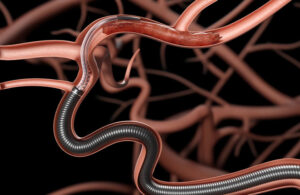
The three-way benchtop study of the company’s Millipede88 catheter, tested with in vitro models of large vessel occlusions, was described by researchers as the first of its kind to tackle emerging techniques in stroke care.
“Two new aspiration techniques arrived at once, and neither had been compared against the other under identical conditions,” said the study’s first author, Ameer Hassan, head of the neuroscience department at Valley Baptist Medical Center.
“In this model, getting more clot into the catheter only helped if the clot did not fragment on the way in,” Hassan said. “Super-bore aspiration gave the highest first pass effect and the highest final revascularization in both territories, and the fewest fragments escaping downstream in every clot type we tested.”
DeviceTalks: Perfuze CEO lays out the challenge – and the promise – of building a new stroke aspiration device
The Millipede88 was greenlit in the U.S. in March as the FDA’s first standalone 0.088-inch catheter for direct aspiration, according to the company.
In the study, it delivered 88% first-pass success in middle cerebral artery blockages, compared to 71% for conventional aspiration and 62% for cyclic aspiration with 0.071-inch catheters. Millipede88 also demonstrated an 82% rate of complete clot ingestion, versus 59% and 62%, respectively. The results were published in the journal Clinical Neuroradiology.
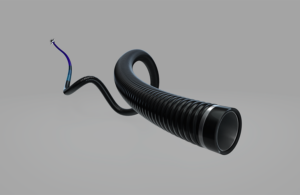
Ultimately, the super-bore catheter posted a 91% rate of final complete revascularization within three passes, in both middle cerebral artery and internal carotid artery models, topping the other methods’ results of about 80%.
Each technique was tested against 34 ovine clot analogs per arm, including soft, mixed and stiff blockages, with silicone representations of the iliofemoral, aortic arch and Circle of Willis anatomy and blood-mimicking fluid.
The company previously completed a clinical study for Millipede88 of more than 180 patients in the U.S. and Europe.
Last year, Perfuze secured an FDA clearance for its Zipline access catheter, alongside a $24 million fundraising. Millipede88 is currently being rolled out through a limited U.S. release in select comprehensive stroke centers, with a broader commercialization planned.