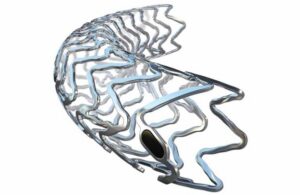
“Freesolve RMS has the potential to provide physicians with an additional treatment option, by reducing the need for permanent implants and potentially offering an alternative to drug-coated balloons in cases where temporary scaffolding is required to support the vessel wall,” the device developer said in a news release.
The catheter-delivered device already has a CE mark and is also available in Asian-Pacific, South American and Middle Eastern countries. The FDA’s Breakthrough Device program accelerates product development and review for devices with potential to more effectively treat or diagnose life-threatening or irreversibly debilitating diseases or conditions.
“This designation marks an important milestone in our efforts to bring Freesolve RMS to patients in the United States,” Teleflex Interventional President and GM Jason Fontana said in the release. “Building on the FDA’s previous Breakthrough Device Designation for Freesolve RMS in below-the-knee applications, it further underscores the potential of bioresorbable magnesium scaffold technology and our commitment to a leave-nothing-behind approach. Freesolve RMS has the potential to redefine clinical practice in today’s cath labs.”
October 2026: Former Medtronic RDN leader Jason Fontana joins Teleflex

Teleflex said Freesolve RMS demonstrated a 3.5% target lesion failure (TLF) rate at four years and no new clinical events between two and four years in the BIOMAG-I first-in-human study.
In June, Teleflex started enrollment for its BIOMAG-III pivotal trial to support a future FDA Premarket Approval (PMA) application for Freesolve RMS.
The device was developed by Biotronik and sold with the rest of the company’s Vascular Intervention Business to Teleflex in 2025.
Teleflex is the world’s 55th largest medical device company according to Medical Design & Outsourcing’s 2026 Medtech Big 100 ranking by revenue.