At the event, the makers of technologies like pulsed field ablation (PFA) systems, left atrial appendage (LAA) devices, heart access catheters and more offered insights into how their therapies contribute to the treatment of AFib.
Here are the biggest stories from the 2026 AF Symposium.
Abbott reports positive findings for Amulet, Volt and TactiFlex Duo
Amulet 360, a next-generation implant, was designed to reduce the risk of stroke in patients with AFib not caused by a heart valve issue (non-valvular). The minimally invasive treatment option, can adapt to the unique shape of the lAA to immediately close it. This could potentially eliminate the need for blood-thinning medication when clinically appropriate. Abbott built it upon the Amplatzer Amulet system, which entered the U.S. market in 2021, having been available in Europe since 2013.
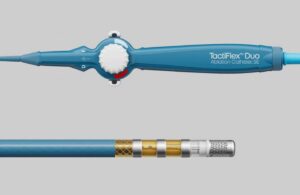
Abbott also reported new 12-month findings supporting the Volt PFA system and positive outcomes with the TactiFlex Duo Ablation Catheter, Sensor Enabled (SE). Volt provides a single-catheter PFA approach to improve workflow and provide procedural flexibility. TactiFlex Duo, a dual-energy, focal ablation catheter, enables physicians to tailor how they deliver AFib therapy.
Read about the Amulet 360 here.
Read about the Volt and TactiFlex Duo here.
J&J MedTech data backs Omnypulse, further supports Varipulse
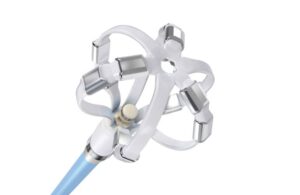
Findings demonstrated 100% acute procedural success with no procedure-associated adverse events. Additionally, 56.7% of cases took place with zero fluoroscopy and 90% of patients achieved primary effectiveness at 12 months.
J&J MedTech also shared findings that examined the incidence of neurovascular events following Varipulse workflow enhancements and the introduction of an optimized irrigation flow rate. The company announced the introduction of optimized irrigation flow rate capabilities last week.
Read about Omnypulse and Varipulse here
Farapulse outperforms thermal ablation

The findings, simultaneously published in Nature Medicine, came from an observational extension of the pivotal ADVENT trial. ADVENT LTO assessed Farapulse’s effectiveness out to four years in paroxysmal AFib patients, comparing the therapy to thermal (radiofrequency or cryo) ablation.
The study evaluated 364 patients, with 183 receiving PFA and 181 receiving thermal ablation. Farapulse demonstrated greater long-term effectiveness at four years (72.8%) compared with thermal ablation (64.3%). It also delivered fewer hospital-based arrhythmia interventions at four years. Freedom from intervention came in at 85.6% for Farapulse, compared to 78.6% with thermal ablation.
Boston Scientific said it marks the first clinical study to report results out to four years in a randomized cohort of patients comparing PFA to thermal ablation.
Field Medical has positive first-in-human PFA data

Dr. Steven Mickelsen, the founder of Field Medical, also founded Farapulse, leading his previous PFA technology developer to its acquisition by Boston Scientific in 2021. The company develops a novel, high-voltage, sub-second pulsed field waveform delivered through the FieldForce ablation system and catheter. The catheter, a focal, contact-sensing catheter, enables instantaneous ablation through point-by-point energy delivery. It achieves this without relying on prolonged tissue-catheter contact.
According to Field Medical, the findings extend its body of clinical evidence beyond ventricular arrhythmias to AFib. With previously reported ventricular tachycardia (VT) data, results support a versatile ablation platform for all heart chambers, the company said.
Read about Field Medical’s study here.
Argá Medtech data supports single-catheter PFA system
Lausanne, Switzerland-based Argá shared findings from the BURST-AF study at the AF Symposium. This study evaluates the company’s Coherent Sine-Burst Electroporation (CSE) PFA system. It looks at the treatment of paroxysmal and persistent AFib. It demonstrated 94% overall lesion durability, 100% procedural success and a strong safety profile with a single, stylet-driven, multi-configurable catheter.
The CSE platform uses a proprietary CSE PFA generator and a multi-configurable catheter. It aims to enable significant flexibility in the treatment of AFib.
Argá designed its sinusoidal/sine wave to allow the tailoring of energy to the different depths of tissue targeted for ablation. CSE’s single, all-in-one catheter delivers the unique waveform through a form factor capable of being shaped to create multiple lesions. Those include circular, linear or focal ablation lesions.
Read about the Argá PFA system here.
Atraverse touts transseptal access system
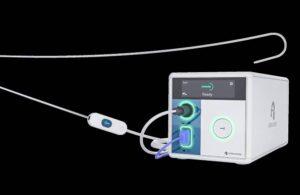
Hotwire is a novel radiofrequency guidewire left-heart access device. It enables zero-exchange left-heart access while acting as a rail for catheter-based therapy systems. Mickelsen invented the Hotwire system with Atraverse co-founder Eric Sauter.
New data for Hotwire highlighted the safety, performance and workflow advantages of Hotwire. Findings demonstrated reduced unintended tissue injury, low radiofrequency (RF) duration and consistent performance. Atraverse said the data reinforce the clinical value of Hotwire’s impedance-guided technology and zero-exchange approach to left-heart access.
Read about the Atraverse Hotwire.
Volta reports positive outcomes for AI-powered AFib ablation
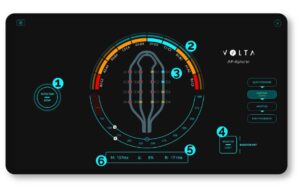
Results from the RESTART trial, published in Heart Rhythm, demonstrated positive outcomes for patients with recurrent AFib and isolated pulmonary veins who underwent ablation using Volta’s AI solution. Volta’s AI-powered AF-Xplorer platform uses AI to analyze real-time electrograms and help electrophysiologists identify specific types of abnormal electrical activity.
RESTART marked the first prospective, multicenter study to evaluate Volta’s approach. It had a primary endpoint of freedom from documented AFib at 12 months after a single AI-guided repeat ablation procedure. The study included 45% of enrolled patients who underwent two or more prior ablations, reflecting a highly complex, treatment-resistant cohort.